
Middle East in Flames: Will Hormuz Freeze the World?
Md. Saiful Islam Shanto | 28 February 2026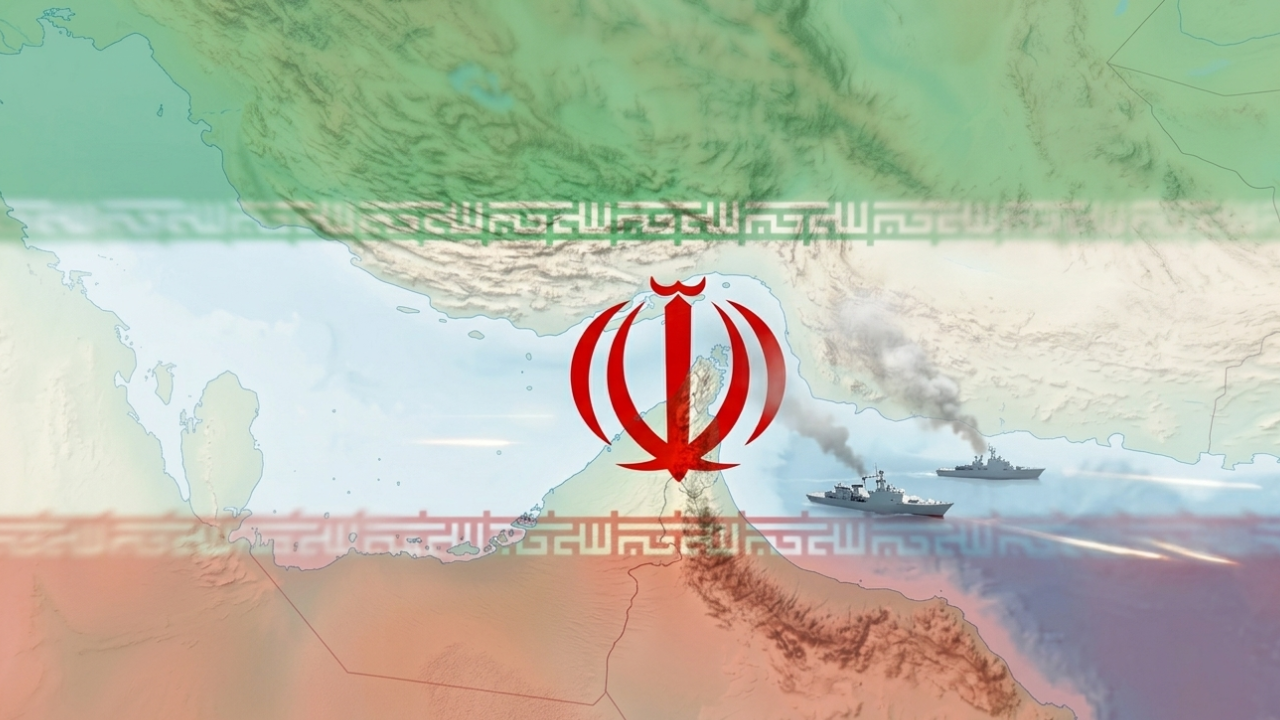
The Middle East entered a terrifying new chapter on February 2026. The United States and Israel launched a massive military campaign against Iran. The United States named this campaign Operation Epic Fury. Israel called its offensive Operation Roaring Lion. In the first few hours, allied forces struck hundreds of targets across Iran. They destroyed military bases, missile facilities, and air defenses. The most shocking event was the targeted assassination of Iran's Supreme Leader, Ayatollah Ali Khamenei. The region is now fully engulfed in an active war. Iran has fired thousands of retaliatory missiles and drones. The human cost of this conflict is already devastating. However, beyond the immediate loss of life, another massive threat is emerging. The entire global economy is now at risk of sudden collapse. The center of this economic danger is a narrow waterway called the Strait of Hormuz.
The Strait of Hormuz is one of the most important geographic locations on the planet. It is located directly between Oman and Iran. It connects the Persian Gulf to the Gulf of Oman and the Arabian Sea. At its narrowest point, the strait is only 21 miles wide. The actual shipping lanes are even narrower. Ships must travel within traffic lanes that are just two miles wide in either direction. Despite its incredibly small size, this waterway is the main artery for the global energy supply. Almost all of the oil produced in the Persian Gulf must pass through this specific bottleneck to reach global markets. If this strait is blocked, the world loses a massive portion of its daily energy.
The statistics regarding the Strait of Hormuz are staggering. According to the U.S. Energy Information Administration, an enormous amount of oil flows through this passage. In the first half of 2025, an average of 20.9 million barrels of oil passed through the strait every single day. This single waterway handles roughly 26% of the entire global maritime oil trade. Furthermore, it accounts for about 20% of total global oil consumption. This means one out of every five barrels of oil used in the world travels through this narrow gap. The oil comes from major producers like Saudi Arabia, Iraq, Kuwait, and the United Arab Emirates.
The danger is not limited to just crude oil. The Strait of Hormuz is also absolutely vital for natural gas. Roughly 20% of the global liquefied natural gas (LNG) trade travels through this corridor. Qatar is currently the world's second-largest exporter of LNG. Almost all of Qatar's gas exports must transit the strait to reach buyers. The United Arab Emirates also relies heavily on the Strait for its gas exports. The modern world relies heavily on natural gas to generate electricity and heat homes. A sudden disruption in the Strait of Hormuz would cause a severe, immediate shock to global natural gas supplies.
Asian countries are the most vulnerable to this crisis. The economies of Asia rely heavily on energy from the Middle East. Statistics show that up to 89% of the crude oil moving through the Strait of Hormuz is destined for Asian markets. The biggest buyers are China, India, Japan, and South Korea. Similarly, over 80% of the liquefied natural gas passing through the strait goes directly to Asia. China alone imports a massive amount of oil from this region. Over half of China's total crude oil imports come from the Middle East. If the Strait closes, the factories in these Asian countries will quickly run out of power. Because Asia is the manufacturing hub of the world, a shutdown there means empty store shelves everywhere else.
For South Asian nations, a crisis in the Strait of Hormuz is a double-edged sword. Countries like Bangladesh, India, and Pakistan are deeply integrated into the global economy. They rely on cheap energy to fuel their rapidly growing industries. In Bangladesh, the ready-made garment sector is the backbone of the economy. This industry requires continuous, affordable electricity to operate. If global oil and gas prices skyrocket, the cost of manufacturing will surge. The price of importing raw materials will also increase due to higher shipping costs. Furthermore, millions of South Asian migrant workers are currently employed in the Middle East. These workers send billions of dollars in remittances back home every year. A prolonged regional war threatens their physical safety and their employment. If these workers are forced to flee, South Asian economies will lose a crucial source of foreign currency.
Unfortunately, there are very few alternative routes. The world cannot simply bypass the Strait of Hormuz. If the waterway is blocked by military conflict or sunken ships, the oil is trapped. There is a small network of pipelines that can move oil around the strait. Saudi Arabia has a pipeline that runs to the Red Sea. The United Arab Emirates has a pipeline that runs to the port of Fujairah. However, these pipelines have very limited capacity. Together, they can only handle about 3.5 to 5.5 million extra barrels per day. They cannot possibly replace the nearly 21 million barrels that normally flow through the sea. The vast majority of the oil would simply be stuck in the Persian Gulf.
Some politicians suggest that strategic oil reserves can save the economy. Major countries maintain large onshore stockpiles for emergencies. Japan currently holds enough reserves to cover nearly 150 days of imports. China has built an estimated 1.2 billion barrels in its own stockpiles. However, these reserves are only a temporary fix. They are designed to manage short-term supply shocks, not a permanent closure of the world's most important transit route. If the Strait of Hormuz remains blocked for several months, these strategic reserves will slowly drain away. Once the reserves are depleted, the global market will face a catastrophic shortage.
The military situation makes a closure highly possible. The Iranian Islamic Revolutionary Guard Corps has frequently threatened to close the Strait. Recently, an Iranian state-affiliated news agency reported that the strait is to be closed to shipping. In response, the United States military has taken aggressive action. During the opening days of Operation Epic Fury, U.S. forces heavily targeted the Iranian Navy. The U.S. Central Command reported that they destroyed 11 Iranian ships in the Gulf of Oman in just two days. They also sank an Iranian submarine. The goal is to prevent Iran from laying sea mines or attacking oil tankers. Despite these American efforts, the waterway remains an active war zone. Commercial shipping companies are terrified to send their expensive vessels into a crossfire.
The economic damage is already starting to happen. The fear of a wider war has shocked energy markets. Immediately after the strikes began, Brent crude oil prices jumped by 10%, reaching over $82 a barrel. The cost of shipping goods has also skyrocketed. Supertanker insurance rates in the Middle East have hit unprecedented, historic highs. Commercial flights across the region are entirely grounded. This adds massive stress to the global supply chain. If war drags on and oil stops flowing, these price increases will become much worse. High energy prices cause inflation to rise rapidly. Everything from gasoline to groceries has become more expensive. This situation could easily trigger a severe, long-lasting global recession.
The world is currently watching the skies over Tehran. The assassination of Ayatollah Ali Khamenei and the massive American bombings are historic events. However, the true global impact of this war will be decided at sea. The Strait of Hormuz is the Achilles heel of the modern global economy. Decades of diplomatic tension have finally exploded into a direct, brutal conflict. The era of empty threats has ended. The world must now prepare for the real possibility of a blocked strait. If the oil stops flowing, the entire world will suffer the consequences. The Middle East might be the battlefield, but the economic shockwaves will ruin livelihoods across the globe.
• Md. Saiful Islam Shanto is a Research Assistant at the Centre for Governance Studies (CGS) in Dhaka, Bangladesh.
Disclaimer: Views in this article are author’s own and do not necessarily reflect CGS policy