
FIFA 2026: Football, Geopolitics and the Global South
Kazi Nishat Aunjum | 30 June 2026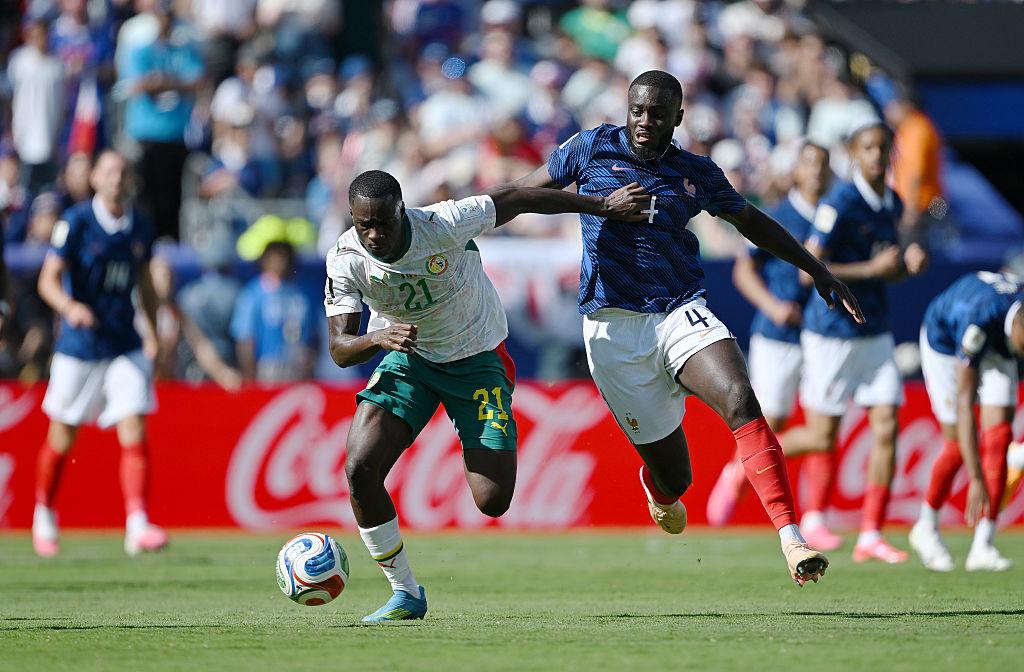
The FIFA World Cup is often described as a celebration of football. But in 2026, it has become much more than a tournament. Hosted jointly by the United States, Canada and Mexico, the World Cup is taking place amid war, migration disputes, sanctions, visa restrictions and rising nationalism. The stadium may be a place of sport, but the road to the stadium has become a place of diplomacy.
This year’s tournament is the largest World Cup ever staged. Forty-eight teams are participating, with matches across sixteen cities in three countries. On the surface, this looks like a victory for globalization. More countries have access and more national identities are visible on the world stage. But beneath this expansion lies a more complicated story. The 2026 World Cup shows that football does not escape geopolitics. It carries geopolitics with it.
One important feature is the presence of countries whose histories are deeply shaped by colonialism. Former colonial powers such as England, France, Spain and Portugal are playing alongside countries once colonized or politically dominated by European empires. Ghana, Senegal, Morocco, South Africa, Mexico and DR Congo are not simply football nations here. They also represent histories of conquest, resistance and post-colonial identity.
This does not mean every match is a replay of colonial history. Football should not be reduced to the past. But the past often returns through symbols. France against Senegal carried the memory of French colonial rule in West Africa. England against Ghana echoed the British Empire and the Gold Coast’s struggle for independence. Spain against Uruguay recalled Spanish rule in Latin America. Such matches can become stages where dignity, memory and identity are expressed.
The opening match between Mexico and South Africa had symbolic value too. Mexico carries the legacy of Spanish colonial rule and struggles over sovereignty, while South Africa carries the memory of colonialism, apartheid and liberation. Their meeting helped frame FIFA 2026 as an event where the Global South is not merely participating, but shaping the narrative.
The host countries add another political layer. The United States, Canada and Mexico are neighbors and partners, but tensions remain. Border control, migration, tariffs and security have shaped relations among them. A tournament advertised as a North American partnership is also a test of political cooperation under global scrutiny.
Beyond post-colonial symbolism, FIFA 2026 is also a platform for Global South diplomacy. For many countries from Africa, Asia, Latin America and the Caribbean, the World Cup is a rare moment of global visibility. These states often face unequal representation in international political and economic forums, but football allows them to appear before a global audience on more equal emotional ground. Their flags, fans, anthems and players become instruments of public diplomacy.
The expanded format has strengthened this dimension. More countries outside the traditional European and South American football powers can project identity and confidence. For countries such as Ghana, Senegal, Morocco, South Africa, DR Congo, Japan and Cape Verde, participation is also about claiming space in a global order where power is usually measured by military strength, economic size or diplomatic influence.
This is where Global South diplomacy differs from traditional great-power diplomacy. The message is not always delivered through formal summits or official statements. It is expressed through national pride, diaspora mobilization, fan culture, media attention and symbolic victories. A win against a former colonial power or a strong performance against a major football nation can become a diplomatic signal. These countries are not passive subjects of the international system; they are active producers of global culture and identity.
The case of DR Congo is particularly important. Its return to the World Cup after more than five decades, and its progress to the knockout stage, carries meaning beyond football. A country often discussed internationally through conflict, minerals, humanitarian crisis and instability can also be seen through pride, resilience and achievement. Such moments do not erase domestic challenges, but they widen how the country is represented globally. This is image diplomacy in a very visible form.
Yet this diplomacy remains shaped by inequality. Teams and supporters from weaker-passport countries often face greater visa difficulties, travel costs and border scrutiny than fans from wealthier states. The tournament therefore both empowers and limits the Global South. It gives visibility, but not always equal mobility. It offers symbolic equality on the pitch, while political inequality remains at airports, embassies and borders. It also exposed FIFA’s limits. FIFA can promote universal participation, but host governments still control visas, borders, security screening and access.
The same contradiction appears in soft power. The United States wants to show organizational strength and global openness, Mexico wants to highlight football culture and regional importance, and Canada seeks to project multiculturalism and stability. Former colonies, meanwhile, use the tournament to show that they are not peripheral to the global game. But if fans are excluded by visa barriers or teams feel politically disadvantaged, the message of unity becomes weaker.
FIFA 2026 matters geopolitically because it brings together old and new world orders. The old order appears in former empires and colonial memory. The new order appears in the rise of Global South teams, migration politics, regional rivalries and the commercial power of global sport. Football cannot solve wars, repair colonial history or normalize hostile relations. But it can create moments where political enemies must communicate, former colonies confront former empires on equal terms, and global inequality becomes visible to a mass audience.
The World Cup is powerful because it is emotional. People watch for goals, but also for identity, memory and belonging. In 2026, those emotions are attached to difficult political questions: who can travel, who is welcomed, who is excluded, who controls borders, and whose history is recognized. FIFA 2026 should therefore be understood as a geopolitical event as much as a sporting festival. Its matches are played on grass, but its meaning is shaped by borders, empires, wars and diplomacy. The ball may move freely across the pitch, but the people following it still live in a world divided by power.
Kazi Nishat Aunjum, Write and Researcher
Views in this article are author’s own and do not necessarily reflect CGS policy.