
Global Crises on the Artist’s Stage: Glamour, Silence, and Moral Responsibility
Depanjali Roy | 25 May 2026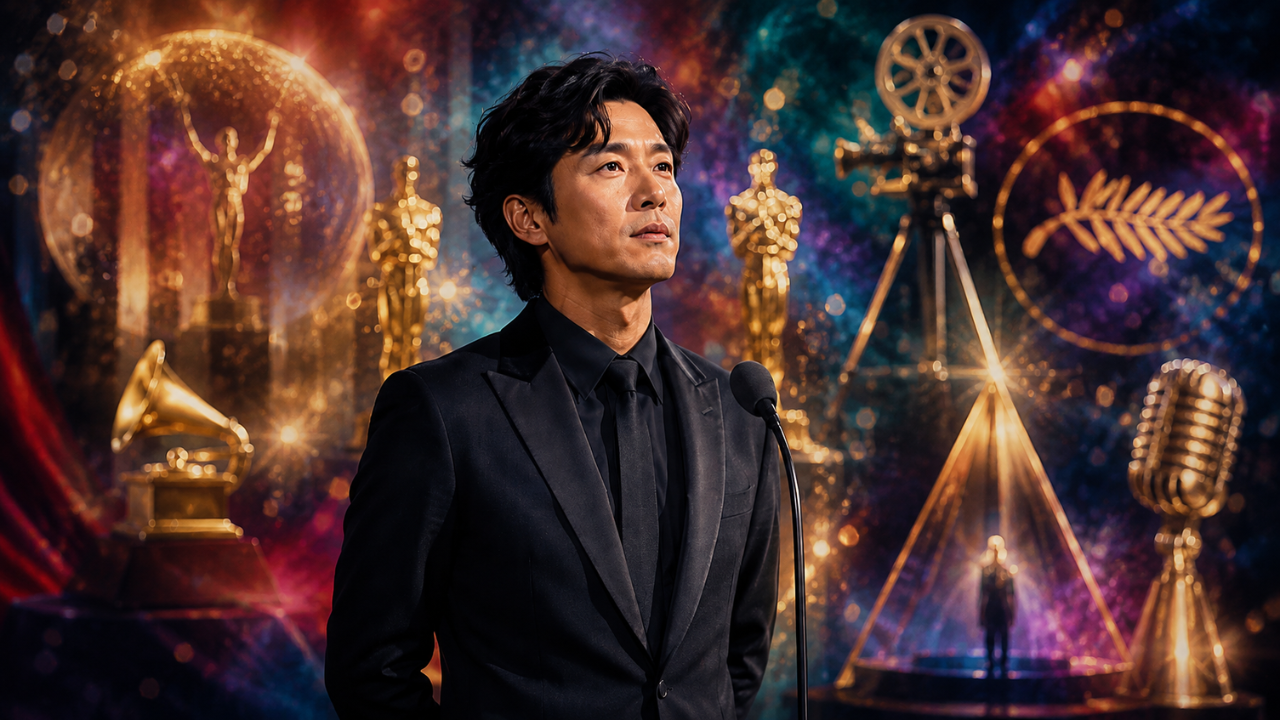
Award ceremonies and major cultural events are usually seen as spaces of glamour, achievement, and entertainment. Artists receive awards, audiences applaud, and cameras capture the elegance of clothing, smiles, lights, and red carpets. Yet when the world is shaken by war, occupation, displacement, migrant repression, racism, and climate crisis, can these stages remain only places of celebration? Recent controversies surrounding Eurovision, the Grammy Awards, the Oscars, the Berlinale, and even football stadiums show that artists and athletes are increasingly using their fame and visibility as platforms for political expression. The real question is whether this is a necessary moral responsibility or an unnecessary politicization of entertainment.
The recent Eurovision debate has brought this question into sharp focus. Eurovision rules prohibit political statements, symbols, or the use of the contest for political purposes. The European Broadcasting Union, or EBU, wants the competition to remain a space for music, performance, and artistic identity. But Eurovision has never been completely free from politics. The controversy over Israel’s participation in the 2026 Vienna contest shows that the claim of being “apolitical” can itself become a political position. Against the backdrop of Israel’s attacks and destruction in Gaza, international media reported that Spain, Ireland, the Netherlands, Slovenia, and Iceland withdrew from the contest or decided to boycott its broadcast.
At the center of this debate are not only states and broadcasters but also artists themselves. Palestinian musicians have argued that when lives, homes, and cultural spaces in Gaza are being destroyed, giving Israel a Eurovision platform amounts to a moral failure. Through the #VoteJustice4Palestine campaign, they urged boycott supporters to share “The Drone Song.” Recorded in Gaza by Ahmed Abu Amsha and based on an old Palestinian folk song, the piece has become a musical act of resistance against the sound of drones. In several reports, Palestinian artists also raised the idea of cultural genocide, arguing that the destruction of cultural life is part of a wider human tragedy.
This raises a deeper question: is a song only a song? When a child wants to stop practicing music because of the sound of drones, and a teacher responds, “We will sing with it,” music no longer remains neutral. It becomes a language of survival. In such circumstances, silence on a glittering stage is itself a position. Therefore, when an event like Eurovision allows a state to participate amid such allegations and devastation, it becomes tied to questions of cultural recognition, legitimacy, and moral accountability.
This trend is not limited to Eurovision. Recent award ceremonies have also shown artists using their platforms to make political statements. At the 2026 Grammy Awards, several artists spoke about anti-immigration raids and ICE. Puerto Rican singer-songwriter Bad Bunny defended the dignity of immigrants. Billie Eilish said, “No one is illegal on stolen land,” while Kehlani took a direct stance against ICE. Many artists spoke in support of immigrants, and several wore “ICE OUT” pins. Through these words and symbols, the Grammys became not only a celebration of music but also a space where debates over migration, identity, and human dignity became visible.
The same pattern was clear at the Oscars. At the 2026 ceremony, the nomination of The Voice of Hind Rajab, a film inspired by true events in Gaza, brought the Palestinian issue into sharper focus. Artists connected to the film wore red Artists4Ceasefire pins on the red carpet to express solidarity with calls for a ceasefire in Gaza and with the suffering of the Palestinian people. Javier Bardem also used a “Free Palestine” pin and anti-war symbols. While presenting Best International Feature, he directly said, “No to war and free Palestine.” As a result, Gaza, immigration, and anti-war messages became visible throughout the award season, from the red carpet to the main stage.
Politics and protest also became major talking points at the opening ceremony of the Berlinale 2026. Political messages there came mainly from guests, while leading filmmakers were comparatively restrained. This distinction is important because artists do not always speak through speeches alone. Sometimes they communicate through clothing, pins, badges, flags, and symbols. Political language is therefore not limited to spoken words; it is also carried through visible signs.
The same trend can be seen in sports. During Barcelona’s La Liga title celebration, Lamine Yamal waved a Palestinian flag. His gesture sparked wide discussion online, and many supporters, activists, and sports figures praised him for his courage. Coach Hansi Flick acknowledged the freedom of personal expression, although he also showed caution about political symbols on a sports stage. This incident shows that stadiums, like red carpets and concert halls, are no longer separate from the moral debates of the wider world.
Should artists and athletes make political statements on such platforms? In my view, they should, but responsibly. They are not merely entertainers; they are influential public figures. A single sentence from them can redirect the attention of millions. Issues that are often pushed aside in mainstream news can re-enter public debate when they are mentioned on an award stage. In the past, artists’ positions on HIV/AIDS, racial discrimination, anti-war movements, climate change, and Palestine have helped shape public opinion and deepen public awareness.
However, there must also be limits. Using a stage should not become a tool for self-promotion. It should turn attention toward people facing injustice. Political statements become powerful when they are connected to an artist’s long-term moral position, work, and social responsibility. A sudden slogan used only for publicity can sound hollow. But when Bad Bunny speaks for immigrants, when Kehlani remains consistently vocal on Palestine, or when Palestinian artists sing against the sound of drones, their words become more than statements. They become testimony.
Some argue that award ceremonies are meant for joy and that politics makes audiences uncomfortable. But for people living under war, occupation, exile, hunger, or fear, the world is never purely entertaining. For those whose lives are wounded by politics, silence is a luxury. Speaking about justice on an artistic stage does not destroy joy; it returns art to its human foundation.
Organizers also have responsibilities. If they choose convenient silence in the name of being “apolitical,” they lose credibility. Russia was excluded from Eurovision after its invasion of Ukraine. Why, then, is Israel treated differently? If rules exist, they must apply equally to all. Otherwise, cultural platforms become part of power politics.
Artists come from diverse ethnic, cultural, and social backgrounds. Many have achieved fame after long struggles against discrimination and adversity, and some have become voices for their communities. Speaking for their people, culture, and rights is not only their right; in many cases, it is also a moral duty. Award ceremonies give them a global platform to defend peace, justice, and human dignity. Art, creativity, and achievement should certainly be celebrated. But if art is connected to human life, suffering, freedom, and dignity, then silence in the face of injustice becomes a defeat for art itself. No matter how bright the glamour is, if its light turns even for a moment toward people standing amid ruins, that stage finds its true social meaning.
Depanjali Roy is a Research Associate at the Centre for Governance Studies (CGS).
Views expressed in this article are the author’s own.