
From Scotland to Wales: A Shift Beyond Two-Party Politics
Jahanara Jaba | 22 May 2026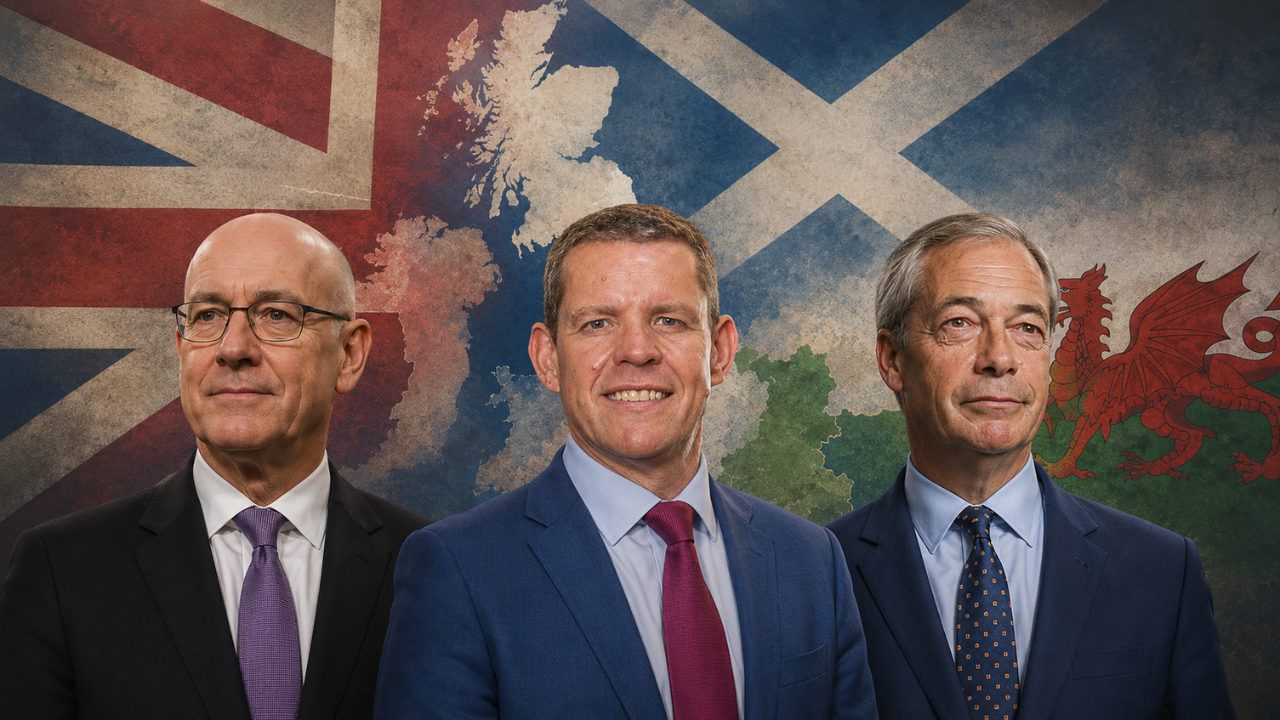
The elections held across England, Scotland and Wales on 7 May 2026 marked a significant juncture in the United Kingdom’s political landscape. The votes took place at different levels of government, including devolved parliamentary elections in Scotland and Wales and local and mayoral elections in England. However, the consolidated outcome pointed to one trend: the weakening of the traditional two-party order and the rise of a more fragmented, multipolar political system.
The UK’s electoral system reflects its devolved electoral structure, with different voting systems used across England, Scotland and Wales. In Scotland, voters elected 129 Members of the Scottish Parliament through the Additional Member System, casting one vote for a constituency candidate and another for a regional party list. In Wales, voters elected 96 Members of the Senedd under a new proportional list system, with 16 constituencies each returning six members. In England, voters took part in local council and mayoral elections, mainly under the first-past-the-post system, where the candidate with the highest number of votes wins, even without securing an absolute majority. The voting age was 16 in Scotland and Wales, while voters in England had to be 18 or above.
In Scotland, the Scottish National Party emerged as the largest party and secured its fifth consecutive election victory, winning 57 seats, while turnout stood at 53%. However, the result also showed a more competitive political environment. Labour and Reform UK each won 17 seats, while other parties continued to play a role in shaping the parliamentary balance. SNP leader John Swinney pledged to improve public services and the NHS.
In Wales, Plaid Cymru, known as the Party of Wales, became the largest party after winning 43 of the 96 seats in the Senedd, six short of a majority. Its leader, Rhun ap Iorwerth, vowed to “make Wales the best it possibly can be.” Reform UK, led in Wales by Dan Thomas, became the second-largest party with 34 seats. Labour, which had long dominated Welsh politics, fell to only nine seats, prompting First Minister Eluned Morgan to resign. The Conservatives won seven seats, the Greens won two, and the Liberal Democrats won one. This marked the first time since devolution that Labour failed to become the largest party in Wales.
In England, the elections were local and mayoral rather than national. Voters elected thousands of councilors across local authorities and chose mayors in several areas. Across England, voters elected nearly 5,000 councilors in 134 councils, while six mayoral contests also took place on 7 May in Croydon, Hackney, Lewisham, Newham, Tower Hamlets and Watford.
Nigel Farage’s Reform UK made big gains in the English local elections, cementing its position as a major challenger to Britain’s traditional main parties. The party successfully gained control of several councils and significantly increased its presence in local government. Farage has prioritized establishing a foothold in town halls as a crucial step leading up to the next UK general election, anticipated in 2029. Meanwhile, the Green Party achieved notable advancements, including mayoral victories in Hackney and Lewisham. The Liberal Democrats maintained their relevance in various local contests, while independent and regional political movements also attracted attention in certain areas. Political movements also attracted attention in certain areas.
Traditionally, the UK’s national politics was shaped mainly by Labour and the Conservatives. That structure is now under strain. The elections showed that British politics is becoming more fragmented and multipolar. Labour and the Conservatives no longer dominate the political space as strongly as before, while nationalist parties remain influential in Scotland and Wales. Reform UK is emerging as a major challenger from the right, and the Greens and Liberal Democrats continue to gain support in different areas. The results were also a major setback for Prime Minister Keir Starmer, whose leadership came under pressure after Labour’s poor performance. Starmer described the outcome as tough but rejected calls to resign, saying he would not walk awayand plunge the country into chaos.
For countries observing the UK, including those in South Asia, the implication is an important reminder. Democratic stability is not granted. Elections are not only about who wins power. They also reveal public trust, institutional strength, party system changes and the direction of society. The 2026 UK elections show that when citizens feel disconnected from traditional parties, they search for new political vehicles. This is the central message of the vote: the age of automatic party loyalty is fading, and the era of competitive, fragmented and multipolar politics is becoming more visible.
Jahanara Jaba is a Research Associate at the Centre for Governance Studies (CGS).
Views expressed in this article are the author’s own.