
BJP’s Bengal Breakthrough and the Uneven Future of Indian Democracy
Nuzhat Tabassum | 21 May 2026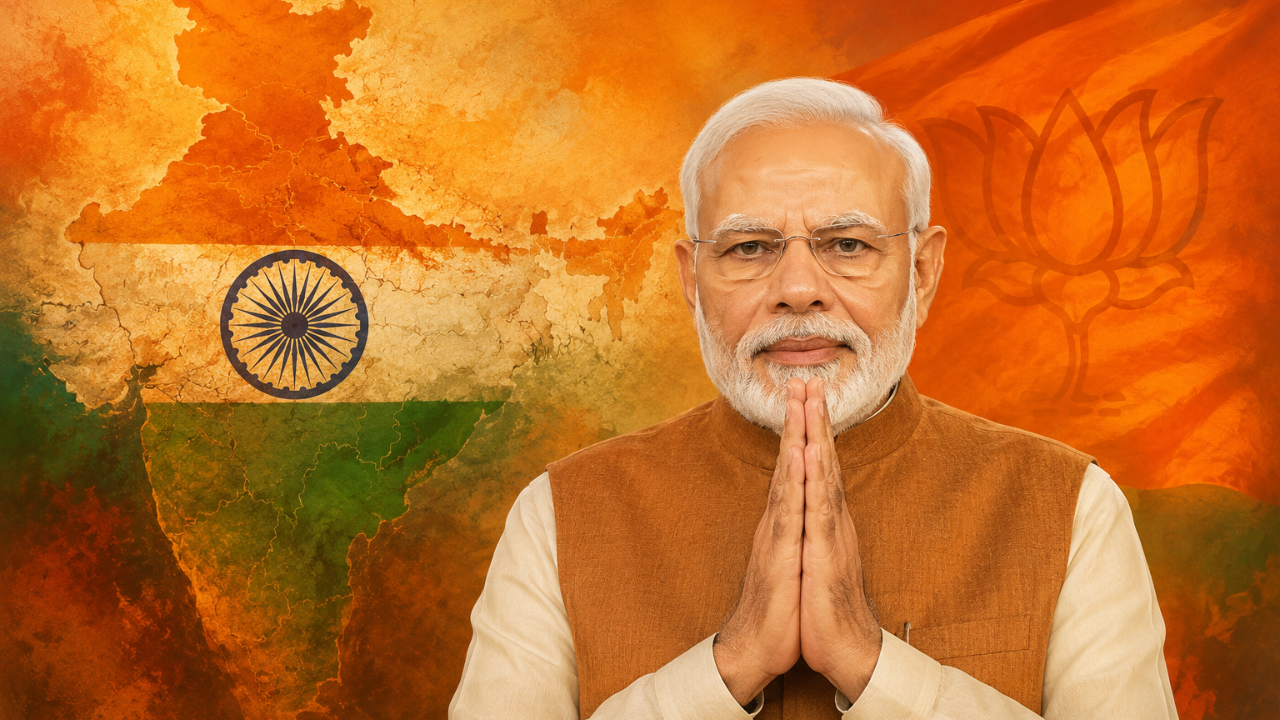
On May 04, 2026 held elections in five Indian states and the results shocked everyone. Bharatiya Janata Party (BJP) has now become the single dominant party in India after the Indian National Congress party with Indira Gandhi as prime minister in the 1970s. Even twelve years ago, the BJP held power in seven states. But now, it governs 22 states out of 28, and the alliance it leads is responsible for the lives of roughly 72% of India’s 1.4 billion people. In Tamil Nadu, a long-standing BJP rival—the regional DravidaMunnetraKazhagam party—was stunned by a new party, TamilagaVettriKazhagam. The party is led by actor turned politician Thalapati Vijay. In Kerala, the main opposition of BJP, Congress led United Democratic Front (UDF) won. But elsewhere, it was an astounding victory for the BJP. In Assam, the ruling party (BJP) maintained its hold on power in the state legislature, and it also triumphed in the union territory of Puducherry. But maybe the most shocking was the result of West Bengal, where BJP was able to defeat All India Trinamool Congress (AITC) party led by Mamata Banarjee from her 15 years of rule. West Bengal has always resisted BJP’s advance in their state. But something has shifted now. Analysts argue that BJP’s campaign strategy in the states and Mamata’s failure to bring something new was the big factor in this election result.
With over 90 million people and 42 seats, West Bengal is a powerful state with the third-largest representation of any state in the Lok Sabha, the country's lower house of parliament. Mamata was ousted largely for her anti-incumbency sentiments. There were allegations that Mamata's party had turned hostile to people who opposed their ideology. She silenced critics and jailed opponents. They could not recognize the people’s needs, aspirations or economic needs. People also accused the party of corruption, rape and extortion. Companies had to pay bribes for licenses and land. In other parts of India the economy was booming, but for West Bengal (4th largest in population) it was stagnating. On the other hand, Modi took strategic decisions to breach the wall West Bengal has made. The BJP's fundamental formula, which combines nationalism, welfare service, religious identity, and a disciplined grassroots organization has been proven successful.
Analysts point out that key to BJP’s success is their focus on grassroot campaigns, increased use of welfare handouts and determination to stay close to voter concerns. They became an alternative to AITMC. BJP gave their utmost importance to West Bengal, which is why, Modi dispatched his home affairs minister Amit Shah to personally supervise the campaign. The party also strengthened its booth-level presence, focusing sharply on local issues rather than national narratives, and tightening alliance management in states where it could not win alone. The victory in West Bengal is also very important for the BJP since Shyama Prasad Mukherjee, a native of the state, formed the Bharatiya Jana Sangh, the BJP's predecessor, in 1951.
Also, BJP took the controversial SIR (Special Intensive Revision) process which first started in 2025 in Bihar and later expanded to 9 states and 3 union territories which includes West Bengal as well. Local election officials conducted house - to - house verification of voters. Citizens were required to reestablish their eligibility for citizenship through proper documentation in a very tight deadline. Failure to do so risked removing one from the voter list. Migrant laborers were harmed by the process. Bihar and Bengal are India's biggest suppliers of labor and are employed in far-off regions. The short verification time prevented many from returning home. Many had trouble with inconsistent spelling, missing legacy papers, changing their last name after getting married, or inconsistent government records. Poor women and Muslims were particularly affected by these issues. Many complained that their names had been removed from the voter list. The BJP presented it as an effort to eradicate "illegal infiltrators," mainly undocumented Muslim migrants from Bangladesh. In the end, around 2.7 million Bengali voters were formally removed off the lists. Therefore, even if the ECI is required by the constitution to operate as an impartial body, it is fair to argue that there are grounds to assume the decision was "stolen" with the help of the state apparatus.
BJP also took advantage of religious polarization. A Hindu majoritarian campaign that greatly inflated the TMC's purportedly "pro-Muslim" position also contributed to the BJP's triumph. They constantly painted Mamata giving more opportunities to Muslims. This strategy has put TMC in a difficult position. Muslims in West Bengal always voted for Mamata and talking against them meant losing vast numbers of voters. Also taking pro-Muslim stance also made it harder for her to ensure the Hindu majority voters. BJP framed itself as the defender of Hindu interests. This strategy helped consolidate Hindu voters across caste and class lines. In addition, the Modi administration sent a record 2,400 companies of paramilitary personnel to West Bengal for the polls. According to the federal government, this was done to let election authorities conduct the process without worrying about political violence. Voter removals were most prevalent in districts with sizable Muslim populations. Mamata argued that the election commission did not play its impartial and neutral role properly; rather favored the central government. And argued that deploying that much paramilitary force has created fear among the voters to vote against BJP, a claim which BJP has rejected as they have only deployed the forces to protect the voters from being intimidated by TMC.
BJP’s long-awaited goal to make India Congress free by 2047 is near. But it also creates uncertainty about democracy. On one hand, the defeat of chief ministers in West Bengal, Kerala and Tamil Nadu shows that the citizens still have power to change leaders, indicating that electoral competition still works. On the other hand, the dominance of one party in the majority of the states, role of election commission, deployment of paramilitary forces, using religious diversity suggest that the democratic field is becoming increasingly uneven. Strong administrations can endure in a democracy, but when institutions seem weak and political rivalry becomes unfair, it becomes susceptible.
All things considered, the BJP's win in West Bengal goes beyond a state-level election triumph. It portends the increasing nationalization of Indian politics, the erosion of regional opposition, and the spread of Hindutva into new political spheres. It also highlights the conflict at the core of modern Indian democracy: elections are still competitive, but concerns about the system's impartiality are growing. Whether electoral successes will be backed by institutional restraint, minority rights protection, and respect for democratic principles is India's biggest issue. Managing ties with an India where Hindu nationalist ideologies, border security, and internal politics are becoming more intertwined would be a problem for Bangladesh.
Nuzhat Tabassum is a Research Associate at the Centre for Governance Studies (CGS).
Views expressed in this article are the author’s own.