
Loyal Puppet: How Ye Win Oo Became 1st Intelligence Chief to Lead Myanmar Military
Maung Kavi | 06 April 2026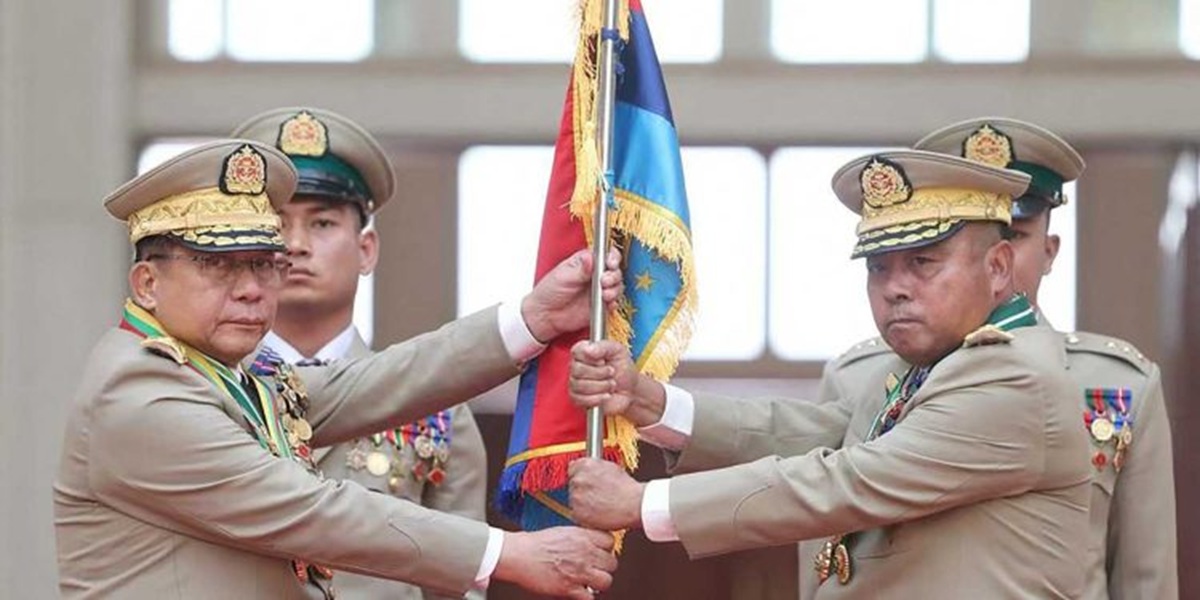
The appointment of General Ye Win Oo as commander in chief of the military marks the first time in Myanmar’s history that a head of the feared and hated Military Intelligence (MI) has risen to lead the armed forces.
Across decades of military rule, dictators have relied on their intelligence chiefs as pillars of power—but they elevated them only as far as they needed and purged them when they grew too influential. Against that backdrop, Ye Win Oo’s rise represents a dramatic departure.
The long list of powerful MI bosses who served successive military rulers stretches from Colonel “Moustache” Lwin via Col Chit Khin, Brigadier General “Spectacles” Tin Oo, Col Aung Htay, Col Myo Aung, Col Kan Nyunt, Col Aung Koe, Gen Khin Nyunt, Lt Gen Myint Swe, Lt Gen Ye Myint, Lt Gen Kyaw Swe, Lt Gen Mya Tun Oo to Lt Gen Soe Htut and most recently Ye Win Oo.
“Spectacles” Tin Oo and Khin Nyunt stand out as the most powerful and feared MI chiefs of their eras, but both ultimately fell victim to the dictators they served.
Ne Win grew increasingly uneasy as Tin Oo’s influence expanded to the point where staff inside the dictator’s own office jokingly referred to Ne Win as “Number One” and Tin Oo as “Number One and a Half” behind their backs. Historical accounts note that jealous generals also whispered against Tin Oo, feeding Ne Win’s suspicions. Ne Win finally jailed his protégé in 1983.
A similar dynamic unfolded two decades later. Senior commanders under Than Shwe urged him to move against intelligence chief Khin Nyunt, warning that his growing power posed a threat to the top leadership, an account later confirmed by then deputy MI chief Maj Gen Kyaw Win. In 2004, Than Shwe dismantled Khin Nyunt’s entire intelligence empire and kept him under house arrest for years.
The intelligence apparatus was restructured as the Office of the Chief of Military Security Affairs (OCMSA) that we have today, and for many years thereafter, MI chiefs were kept in their place.
Myint Swe, who succeeded Khin Nyunt, was rewarded with ceremonial posts such as vice president and acting president for his loyalty to Than Shwe and Min Aung Hlaing but wielded little real authority. It was only with Ye Win Oo that the narrative changed again.
The appointment reflects Min Aung Hlaing’s deep personal trust. An alumnus of the Officer Training School’s 77th intake, the lesser of the two officer academies, Ye Win Oo has risen in a hierarchy traditionally dominated by Defense Services Academy graduates.
“All the dictators, from Ne Win to Than Shwe, appointed their confidants as military chiefs. Min Aung Hlaing has done the same by appointing Ye Win Oo,” a veteran political analyst told The Irrawaddy. “By choosing him, Min Aung Hlaing is ensuring that the new military chief will never challenge him when he assumes the presidency.”
A Myanmar based military researcher agrees, noting that Ye Win Oo has no distinguished battlefield record. “He rose through the ranks only because he is a trusted loyalist of Min Aung Hlaing,” he said.
In other words, as Min Aung Hlaing seeks both the presidency and ultimate control over the military, appointing a loyalist with no independent power base of his own was essential.
At the handover, Min Aung Hlaing praised Ye Win Oo for “energetically and dutifully” carrying out his responsibilities during the country’s crisis—a reference to the five years since the coup that saw him carry out the arrest, interrogation, torture and murder of anti coup activists. Playing a direct role in the Feb. 1, 2021 coup, he led the raids on President U Win Myint and State Counselor Daw Aung San Suu Kyi.
Although the Constitution designates the commander in chief as the supreme leader of all armed forces, the real power thus remains with Min Aung Hlaing ruling through a puppet.
But the post could still go to Ye Win Oo’s head. “For now, he remains a faithful disciple,” said a Yangon based writer who has studied Myanmar’s political transitions. “Tin Oo once worshipped Ne Win like a god and still ended up in prison. We’ll have to watch how this chapter unfolds.”
Maung Kavi, Writer.
This article was originally published on The Irrawaddy.
Views in this article are author’s own and do not necessarily reflect CGS policy.