
Learn from Afghanistan: The Cost of Looking Awayfrom Women
Tanzila Hosain Tonny | 04 March 2026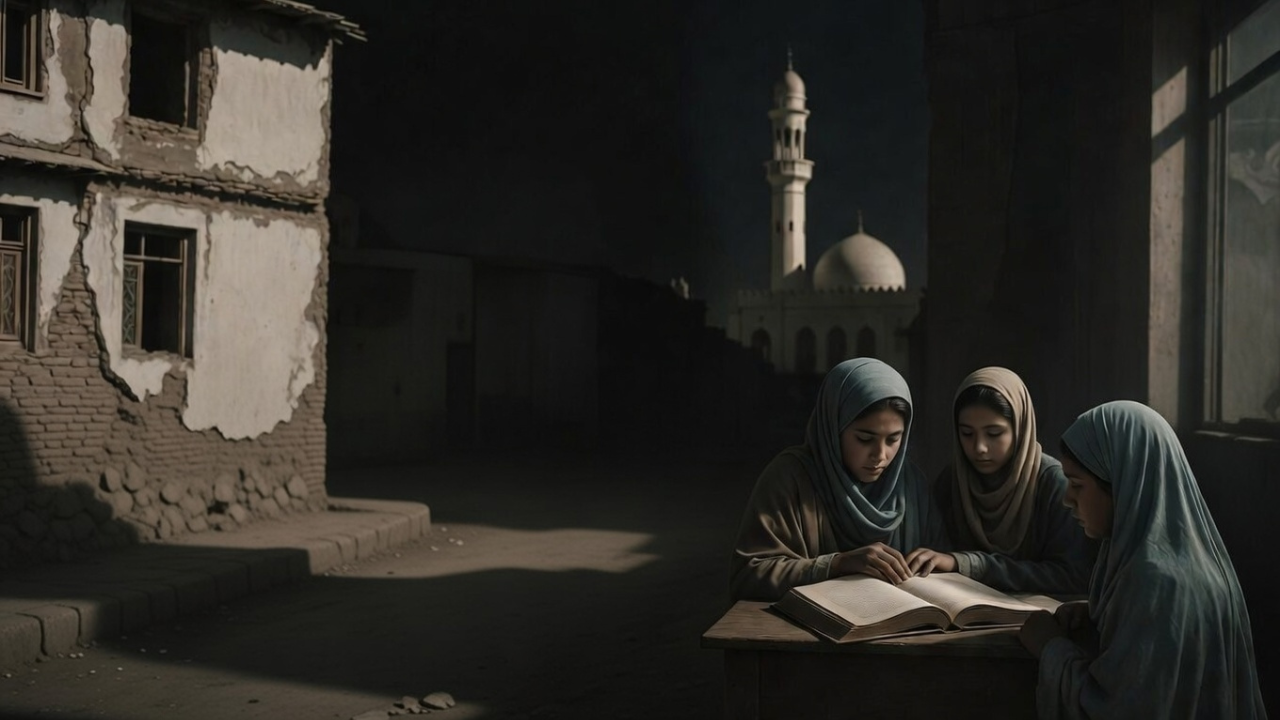
Four years after the Taliban regained control in August 2021, the situation of women and children in Afghanistan has worsened into a system of systematic exclusion that extends into political, economic, social, and private sectors.A system that is consistent with institutionalized discrimination that satisfies the demands imposed by gender inequality. The Taliban have used laws, enforcement tactics, and ideological control to try to keep women out of the public eye and limit their lives to silence, reliance, and captivity.After seizing power, the Taliban enacted laws that prohibited women from working, closed secondary schools for girls, enforced clothing restrictions, and eliminated safeguards for women's involvement in politics and civic life.These restrictions have become increasingly strict over time.
Women are currently excluded from numerous fields, including journalism, the private sector, and government service, with only a few exceptions in basic education and healthcare, which are subject to continual oversight.In October 2024, the Ministry for the Promotion of Virtue and Prevention of Vice issued an order barring adult women from speaking in front of other adult women, including in religious settings like Quranic recitation.This decision is not only an abuse of free expression, but it also represents the first-ever incursion into women's religious practices.Many people have disputed the Taliban's statement that these practices have cultural or religious roots. Women's voices and education are restricted, which goes against fundamental Islamic jurisprudential principles and is a reflection of an extreme ideological interpretation intended to strengthen dominance rather than preserve religion.By using force, surveillance, and punishment to enforce these limits, the Taliban have turned everyday life into a place of continuous fear and control.
Since the beginning, Afghan women have opposed these limitations.Following August 2021, demonstrations led by women in Kabul and other cities called for basic freedoms, employment, and education. Protesters and their families were intimidated by authorities, who also used violence and arbitrary incarceration in response. These acts indicate the normalization of governmental violence against women and the lack of legal protections.Afghan women modified their stand by shifting activism into private and semi-private settings when public protest became increasingly risky. To maintain opposition, they established underground schools, produced art, documented violence, and engaged in internet advocacy. Critical evidence for possible international accountability, including cases before the International Criminal Court and the International Court of Justice, is now provided by these efforts, which were undertaken at considerable personal risk.
The impact of the exclusion of women from the community on the economy is severe. Previously working in IT, public service, and journalism, many educated Afghan women have been forced into unofficial jobs like tailoring or shop assistants in marketplaces exclusively for women. These low-paying jobs are more a reflection of survival than choice. Women's legal, economic, and social dependence is further exacerbated by Taliban regulations that require male relatives to acquire store permits and by regular moral police inspections.
Based on international evaluations, Afghanistan's economic collapse is mostly caused by the exclusion of women, in addition to a human rights disaster. The economy has suffered losses of almost USD 5 billion since August 2021, with limitations on women's employment alone costing up to USD 1 billion a year. In the face of sanctions, inflation, and climate shocks, poverty has increased due to the exclusion of over half of the workforce.The structural depth of women's exclusion is highlighted in the UN Women Afghanistan Gender Index 2024. Afghanistan currently has one of the worst gaps between genders in the world, with women reaching significantly less than the worldwide average of just 17% of their potential in important areas. Afghan women continue to participate in the labor force at a very low rate, with over 78% not in school, employment, or training.
Since fewer women can pursue careers as doctors or midwives, educational restrictions are also hindering healthcare delivery. Health concerns are further increased in some places by prohibitions on male doctors providing treatment. Gender exclusion jeopardizes public welfare, as evidenced by UN Women's warning that inadequate access to healthcare could increase maternal mortality by as much as 50% by 2026.
In accordance with UN human rights monitoring in Afghanistan, women have been forced out of public life by overlapping restrictions that include stricter mahram rules, denial of services to single women, and increased enforcement of the hijab. With many women expressing limited influence even inside their own families, these policies increase vulnerability and dependency while extending control into households and personal decision-making.
Such claims are highly controversial and unfounded in the Islamic context. The systematic exclusion of women is obviously opposed in Islamic teachings. The islam affirms that seeking knowledge is obligatory upon every Muslim(Sunan Ibn Mājah, Hadith 224)and by recognizing separate economic and moral status for men and women, it upholds individual agency and justice by ensuring that each is responsible for their own efforts and entitled to their own rewards without domination by the other(Surah An-Nisa 4:32). Therefore, rather than reflecting the Islamic values of justice, dignity, and ethics, restrictions that silence women or deny them access to education and participation are the result of extreme interpretations intended to consolidate dominance.
Afghanistan serves as an example of how the systematic exclusion of women not only violates their rights but also contributes directly to instability in society, economic downturns, and moral decline. It also demonstrates how religion can be abused to justify injustice and how society and the international community can allow such atrocities to continue via quiet or indifference.
Tanzila HosainTonny is a Research Assistant at Centre for Governance Studies (CGS)
Disclaimer: Views in this article are author’s own and do not necessarily reflect CGS policy