
The Institutional Stakes of Nepal’s Post-uprising Election
Sanjeev Satgainya | 01 March 2026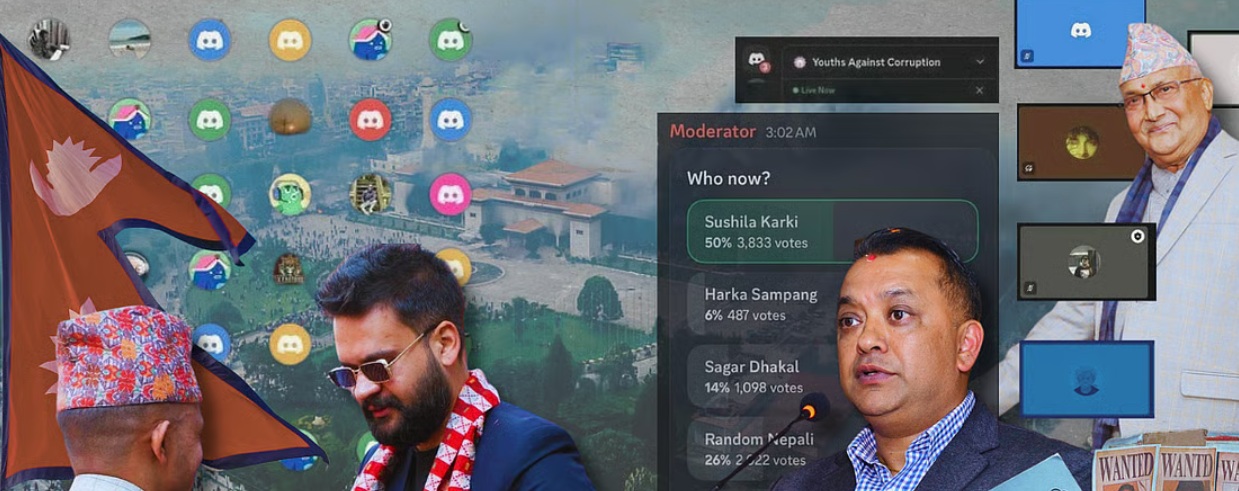
WITH LESS THAN a week to go before Nepal goes to the polls in an election triggered by last September’s Gen Z uprising, “change” is the dominant watchword. Yet there is little clarity about what kind of change the ballot will actually deliver – and at what institutional cost.
Elections can renew leadership; they do not automatically renew institutions. And democracy is about institutions.
Nepal’s 36-year democratic journey – with 18 years as a federal democratic republic – has produced representation and rotation of power, but not always administrative depth or consistent service delivery, both of which are often tied to government stability. The result has been a widening trust deficit between the political parties that have ruled Nepal and the public at large.
The upcoming vote is thus unique. Elections in a multi-party democracy are about political parties, but this election is also about something more – competing interpretations of how a democracy should function: quick and disruptive, procedural and reformist, or experienced and centralised.
The three figures currently dominating the national conversation exemplify these three interpretations: Balendra Shah, or “Balen”, of the upstart Rastriya Swatantra Party (RSP), an outsider to Nepal’s political establishment and a symbol of impatience with it; the Nepali Congress’s Gagan Thapa, an institutional reformist; and K P Sharma Oli of the Communist Party of Nepal (Unified Marxist–Leninist), ousted as prime minister by the September protests, a seasoned centraliser of executive power.
If the RSP fails to secure a majority, no other party is likely to achieve one, given Nepal’s plethora of political parties and established patterns of voter fragmentation. In the wake of the Gen Z uprising, the Nepali Congress has attempted a revamp, with the old leadership pushed aside and Thapa installed as the new party president. Despite the push for a Congress 2.0, Thapa is unlikely to win a majority for his party. The blame may not lie with him per se, but rather with his party, which is fragmented and viewed by many as a perpetuator of the status quo and patronage politics. Meanwhile, Oli has become a villain in many people’s eyes over the killings of 8 September, the first day of the Gen Z protests, and this will affect the poll prospects of the CPN-UML as he has stubbornly refused to relinquish party leadership.
Nepal’s electoral system is such that a hung parliament is almost always likely. Coalition governments are the most probable outcome. But since the tone is set from the top, the next prime minister will largely determine how Nepal balances governance delivery with political restraint in the face of popular pressure for rapid and radical improvement in governance, corruption, the economy and more. Which is why this election is not just an exercise of the vote but also a stress test of Nepal’s democracy.
BALEN SHAH’S political rise since his upset victory as an independent candidate in Kathmandu’s 2022 mayoral election has been rooted in anti-incumbency. As the city’s mayor until this January, he projected decisiveness, visible action and a willingness to confront entrenched interests. As an independent, he was not burdened with party baggage. Now, however, he is a “senior leader” in the RSP, which dramatically changes the stakes.
Shah joined the party only recently, in search of an organisational vehicle to take him from mayoral to national power. The RSP’s president, the former television host Rabi Lamichhane, is facing charges of fraud and embezzlement in a case that is still before the courts. The shadow of this will fall on Shah as well. Still, his appeal remains cross-generational and disruptive. To many, he represents a rupture with an exhausted and discredited political class.
But disruption carries institutional risks. “Delivery” politics often views oversight and checks and balances – all fundamental to democracy – not as safeguards but as hurdles. The impulse for speed threatens to erode the constitutional guardrails designed to prevent decisive leadership from turning into unchecked authority.
Furthermore, Shah, now 35 years old, lacks parliamentary experience. Ruling from Singha Durbar, the seat of the executive, demands a level of rigour and consensus-building that ruling from the mayoral office does not. He has yet to get a handle on the demanding, structural grind of Nepali politics. Negotiation with coalition partners, provincial governments and constitutional bodies is not optional – it is an integral part of parliamentary politics.
Shah’s mayoral style leant towards centralised decision-making and unidirectional communication via social media. This has worked well for Shah – his online popularity borders on a cult of personality – but the “digital pulpit” has also exposed his impulsive streak. His past provocations – from a threat to “burn down Singha Durbar” to using profanity against neighbouring countries and the political class – raise a critical question: is he a transformative national leader, or simply a hot-headed, volatile young man?
Shah’s reluctance to abide by established processes was evident during the early days of his mayoral tenure, when he employed bulldozers to raze illegally constructed structures with minimal notice. Another episode, in which he defied a court order regarding the removal of the parking area of a private hospital, attracted a charge of contempt of court.
While Shah’s supporters see resolve in his actions, his critics find them discomforting. At the national level, similar instincts would run up against constitutional guardrails. Nepalis longing for “delivery” may find Shah’s focus on action and speed appealing. Yet democracy is intentionally and inherently process-heavy. Consultation slows decisions, but it also legitimises them.
A majority government under Shah could produce pace, but if not institutionally grounded it risks undermining the very norms that make reform lasting. An excessive focus on speed and efficiency can inadvertently hollow out the democratic soul of the state.
GAGAN THAPA represents a different proposition: reform from within existing institutions rather than rupture with them. Having started as a rabble-rousing student leader, Thapa has evolved over the years into a politician whose persona is rooted in policy discourse, institutional literacy and procedural engagement. He speaks the language of pluralism, transparency and economic restructuring. In democratic terms, this aligns with rules-based governance.
Thapa has not been associated with constitutional brinkmanship or the executive defiance of judicial authority. Yet institutional reformism comes with its own vulnerabilities. He has years of legislative experience, but at the executive level he is as yet untested. Managing a national coalition in a fragmented system, where multiple interest groups converge and collide, demands trade-offs that can dilute reforms.
Despite its governance failures, its association with patronage networks and its role in fuelling bureaucratic inertia, the Nepali Congress, as a party, has anchored itself to democratic values and constitutionalism. Since Thapa comes from the Congress stable, few can question his commitment to democratic norms and pluralism.
Yet reform from within entrenched systems is structurally difficult. Reform through institutions may sound appealing – and democratic – but it also presents a paradox: the institutions Thapa seeks to employ for reform are themselves primary sources of inertia. His “delivery” attempts are likely to be hamstrung by structural constraints – both those internal to his party and systemic ones.
Thapa has to navigate a deeply entrenched patronage system within the Nepali Congress that often prioritises loyalty over merit. As prime minister, he would sit at the top of a bureaucracy that believes in procedural survival, where following the rulebook serves as a shield against taking decisive action. A parliamentarian for four terms over 18 years, Thapa, at the age of 49, has not escaped criticism. Critics call him a master of the “what” – articulating lucidly what needs to be done – but largely falling short on answers to how things should be done. His test will be bridging the gap between the “what” and the “how”.
In a society thirsting for immediate change, process-driven reform may be perceived as inadequacy. The risk of democratic backsliding under Thapa is low, but failure – or perceived failure – on delivery risks fuelling further public frustration.
K P SHARMA OLI is an old hand. He has led the country three times – on one occasion commanding an almost two-thirds majority in the parliament. A seasoned politician, aged 74, Oli understands the mechanics of governance, coalition management and bureaucratic navigation. Yet he is not remembered for delivery.
Oli knows that, in moments of uncertainty and confusion, authority can project stability, and he is adept at exercising command and control. And this is not just rhetorical; it’s rooted in structure. Even after the whole country rose up against his government, he recently consolidated his authority over the CPN-UML, amending the party statute to serve a third term as its chair. He has largely moulded the party around his image and left little room for dissent.
Past episodes – such as his controversial dissolutions of the parliament, later overturned by the Supreme Court – illustrate both his hubris and his comfort with testing constitutional boundaries. Oli claims to be democratic – he has generally respected electoral outcomes – but his preference for centralised decision-making and strong executive control may limit pluralism.
In early 2025, his cabinet pushed through an ordinance to amend a slew of laws at once, arguing that the “sluggish” parliamentary process was a hindrance to investment and economic growth. (It should be noted that Thapa supportedOli at the time.) While supporters saw the ordinance as cutting through red tape, critics alleged that amending laws via executive ordinance undermined the legislative process and argued that the end does not justify the means.
Oli’s authoritarian tendencies have also been evident in his systematic efforts to centralise the state’s levers of power. In 2018, as prime minister, he brought the Department of Money Laundering Investigation, the Department of Revenue Investigation and the National Investigation Department – agencies traditionally overseen and controlled by the finance and home ministries – directly under the prime minister’s office, effectively under his own purview.
Despite this concentration of power, the government under Oli was largely unsuccessful in combating corruption or improving public-service delivery. In response, Oli has used assertive rhetoric, political manoeuvring and nationalist sentiment to cloak his failures, leaning more towards theatrics than substance.
Oli tests Nepal’s democracy not through inexperience but through concentration of power. A return to his leadership, though unlikely, could perpetuate the same administrative stagnation and short-term, self-serving coalition politics that pushed the populace to revolt. Simultaneously, it could also revive concerns about executive assertiveness, power consolidation and wilful misinterpretations of constitutional norms. And even if Oli is now sidelined, he might have laid the ground for any newcomer tempted by the lures of strongman politics.
MEASURED AGAINST democratic parameters – rule of law, institutional restraint, press freedom, civil rights and governmental temperance – all three prospective prime ministers represent distinct stressors.
Shah brings the risk of institutional bypass in pursuit of speed. His mayoral record does not prominently feature participatory policymaking. His reliance on unidirectional communication via social media limits exposure to adversarial questioning. There is no record of systemic media suppression under his watch, but neither is there a well-tested record of tolerance for sustained criticism at the national scale. Lamichhane, meanwhile, as the head of the RSP, has not hesitated to rail against the media, accusing it of being in cahoots with the political establishment.
Thapa risks institutional inertia in pursuit of procedural legitimacy. He generally maintains a communicative posture towards the media, engaging in interviews and positioning himself as a defender of press freedom. He has thrived on media visibility, but this style risks making him appear more performative than substantive. Under him, the status quo is likely to be preserved, with space for the media neither shrinking nor significantly expanding. Thapa views social media as a democratic forum, yet his past views on its regulation have been sketchy. He has at times remained silent while governments with the Nepali Congress as a coalition partner have drafted restrictive digital legislation, only to distance himself after public backlash. When Oli blocked 26 social media platforms in September last year, sparking the Gen Z protests, the Nepali Congress was again the CPN-UML’s primary political ally.
Oli risks institutional strain through executive consolidation. His relationship with the press has been more combative, yet he does entertain the media. It is a different matter that his press conferences are often unidirectional and preachy. His tenure saw tensions with media outlets and proposed regulations that critics viewed as restrictive. He has at times portrayed critical journalism as partisan. While he has a team to operate his social media handles, he holds a dim view of the medium.
Political personalities aside, there is a persistent belief in Nepal that failures to deliver better lives to the people have been due to the absence of stable government. This perception risks snowballing into a deeper crisis as the blame gradually shifts from politicians to the democratic system itself.
Nepal’s recent history is marked by short-lived governments and fragile coalitions, with no party able to rule on its own and several parties with enough seats in parliament to intermittently join together and move apart. In such a climate, stability is politically seductive; it makes a good political slogan. But stability achieved through excessive concentration of authority can weaken democratic guardrails, and stability at the cost of stagnation risks further popular discontent. Perpetual coalition fragility can, and has, eroded public faith in democracy’s capacity to deliver.
The Gen Z protests were not driven by ideological treatises. They were expressions of exhaustion – with corruption, with impunity, with gerontocracy, with drift. But impatience alone cannot effect democratic renewal; experience alone cannot secure it; and procedural virtue alone cannot deliver it. Nepal will need to find a new mix of ingredients to really make its way forward.
It may be tempting to frame this election as a contest of outsider versus insider, of youth versus veterans, of reform versus the establishment. But that framing oversimplifies the stakes. The more precise question is institutional: can Nepal reconcile urgency with restraint?
The danger to democracy comes not only from overt backsliding but also from slow erosion: when institutions weaken under the pressures of expediency, when concentration of power feels efficient, or when proceduralism becomes paralysis.
Nepal’s upcoming vote will not simply determine who governs. It will signal how the country chooses to balance speed, authority and restraint, and define the next phase of its democratic path. What form of change it will bring – disruptive, procedural or centralised – will settle whether Nepal’s democracy deepens, erodes or merely survives. That, more than the arithmetic of seats, is what is truly at stake. That is the democratic test Nepal faces in this election.△
Sanjeev Satgainya is a former Editor of The Kathmandu Post and currently writes on Nepal for The Hindu.
This article was originally published on Hima South Asia.
Views in this article are author’s own and do not necessarily reflect CGS policy.