
Political Crisis and Military Intervention in Guinea-Bissau
Debi Karmakar | 30 November 2025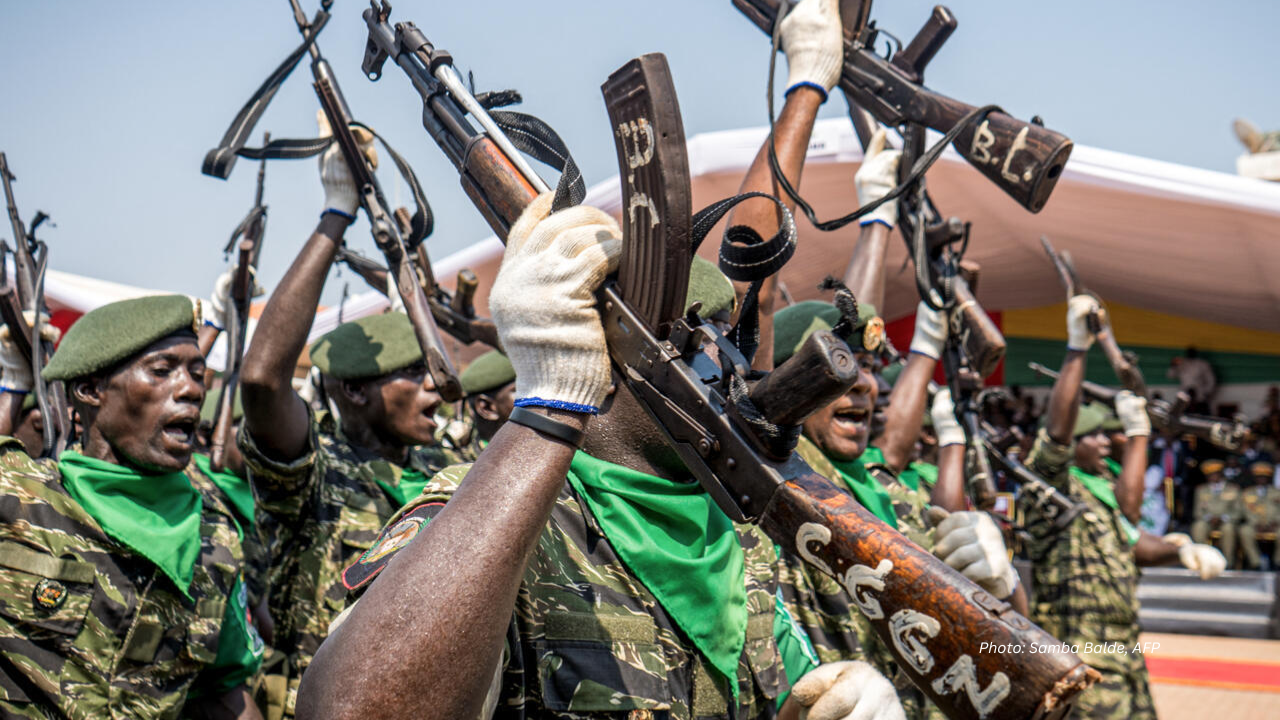
Guinea-Bissau has experienced recurrent political instability since independence, marked by fragile civilian institutions and repeated military interventions. The crisis that culminated in a military takeover in late 2025 must be understood as the outcome of long-standing tensions among political parties, unresolved disputes over electoral legitimacy, and the persistent autonomy of the armed forces from civilian control.
At the center of Guinea-Bissau’s party system is the African Party for the Independence of Guinea and Cape Verde (PAIGC), the historic liberation movement that dominated politics for decades after independence. Although PAIGC retained significant organizational strength and parliamentary influence in the 2010s, it became increasingly fragmented by internal divisions and leadership rivalries. These weaknesses opened space for new political formations, most notably Madem G15, a coalition formed by dissident PAIGC figures and allied groups seeking to break the party’s dominance.
The political balance shifted decisively after the 2019 presidential election, which brought UmaroSissocoEmbaló, backed by Madem G15, to the presidency. The election outcome was contested by PAIGC and its allies, who challenged the legality of the results and the constitutional procedures used to confirm Embaló’s victory. Although Embaló consolidated control over the executive, questions about the legitimacy of his mandate persisted and became a structural feature of Guinea-Bissau’s politics.
Between 2020 and 2024, tensions between the presidency and opposition parties deepened. PAIGC and allied groups accused the executive of marginalizing parliament, ruling through decrees, and exerting undue influence over the electoral commission and judiciary. The presidency, in turn, portrayed the opposition as obstructive and unwilling to accept electoral outcomes. This confrontation produced repeated legislative paralysis, with boycotts, walkouts, and legal challenges preventing effective governance. By early 2025, disputes intensified over electoral timelines, the duration of political mandates, and the authority to oversee future elections.
The crisis escalated as institutional deadlock increasingly replaced political competition. The absence of a trusted mechanism for resolving disputes over constitutional interpretation allowed political disagreements to harden into a broader legitimacy crisis. Public protests and heightened political rhetoric signaled growing polarization, while state institutions appeared unable to mediate between rival camps. In this context, the military, historically insulated from civilian oversight and accustomed to intervening during periods of political uncertainty, re-emerged as a decisive actor.
The coup unfolded in late November 2025. Units of the armed forces moved into the capital, Bissau, and took control of key government and security installations. The military restricted the movement of senior political figures and effectively suspended normal civilian authority. Although there were no reports of widespread violence, the intervention disrupted constitutional governance. Military leaders justified their actions as necessary to prevent political chaos and preserve national stability, presenting themselves as neutral arbiters in a paralyzed political system. However, the absence of a clear constitutional framework or timetable for restoring civilian rule led observers to characterize the intervention as an unconstitutional seizure of power rather than a temporary security measure.
Importantly, the coup did not appear to be openly backed by any major political party. While some civilian actors privately welcomed the intervention as a means of breaking the deadlock, neither PAIGC nor Madem G15 formally endorsed military rule. The armed forces acted largely on their own institutional authority, consistent with Guinea-Bissau’s historical pattern in which the military intervenes without explicit civilian sponsorship.
International and regional responses were swift and critical. The Economic Community of West African States (ECOWAS) condemned the military action and reiterated its opposition to unconstitutional changes of government. ECOWAS signaled readiness to pursue diplomatic engagement and warned of possible sanctions or suspension if constitutional order was not restored. Similarly, the African Union invoked its zero-tolerance policy toward coups, calling for the immediate return to civilian rule and respect for democratic processes. Both organizations emphasized dialogue and mediation, reflecting concern that further instability in Guinea-Bissau could compound a broader regional trend of military takeovers in West Africa.
Neighboring states, including Senegal and Guinea, did not play a direct role in the crisis. Their engagement was limited to diplomatic alignment with ECOWAS and AU positions, motivated by fears of cross-border spillover such as arms trafficking, organized crime, or refugee movements. International partners beyond the region similarly prioritized stability and constitutional restoration, offering no recognition or support to the military intervention.
In sum, the late-2025 coup in Guinea-Bissau was not an abrupt rupture but the culmination of protracted political conflict rooted in disputed electoral legitimacy, executive–legislative confrontation, and weak civilian control over the military. The intervention exposed the fragility of party politics and constitutional governance in the country and underscored the enduring role of the armed forces as a political arbiter. While the immediate crisis halted further escalation, it left unresolved the structural conditions that have repeatedly undermined democratic consolidation in Guinea-Bissau.
Debi Karmakar is a Research Associate at Centre for Governance Studies (CGS)
Disclaimer: Views in this article are author’s own and do not necessarily reflect CGS policy