
Bangladesh Elections will be A Test of Democracy
Violence and tensions mark the run-up to the first free elections since Hasina’s ouster.
GRACE CORCORAN | 14 January 2026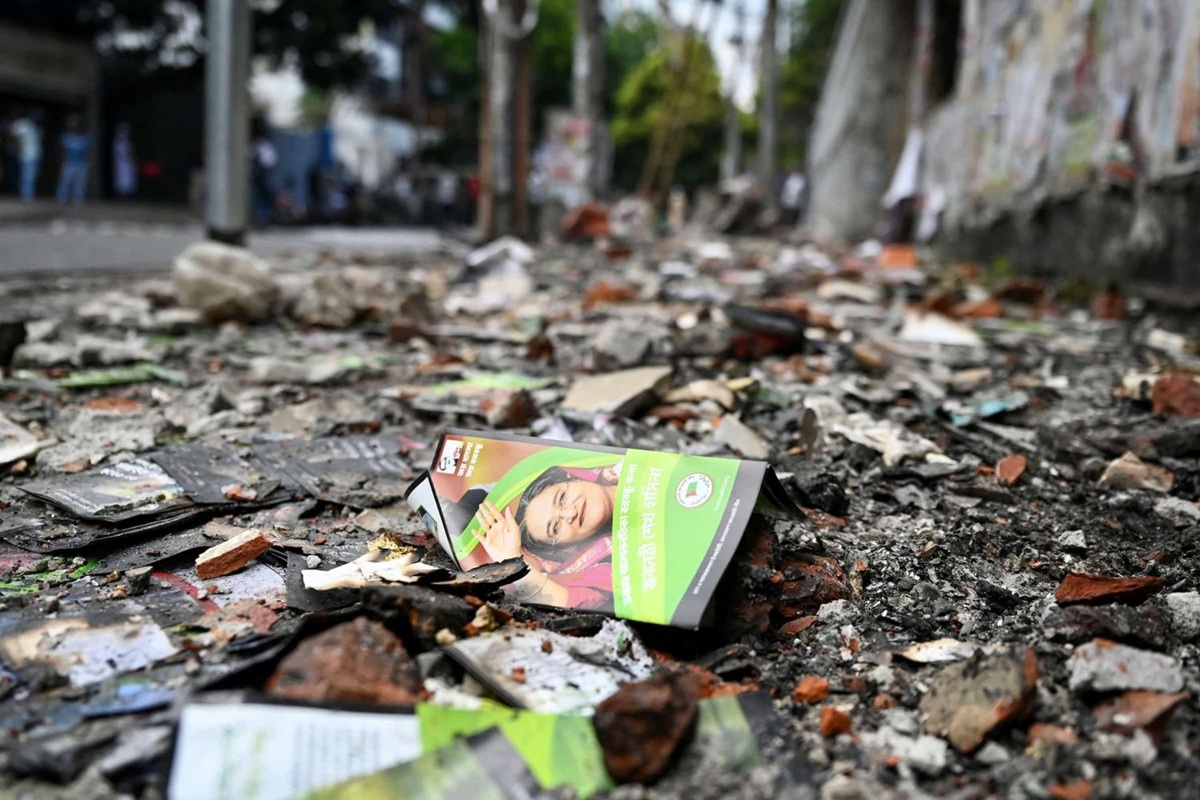
Earlier this month, a leader of the JatiyatabadiSwechasebak Dal, the volunteer arm of the Bangladesh Nationalist Party (BNP), was assassinated. Only weeks before, Sharif Osman Hadi, a prominent youth leader during the Monsoon Revolution, was also assassinated in the city’s capital.
On 12 February, Bangladesh will hold one of its most significant elections in years. Nearly 128 million people will be eligible to vote for 300 seats across the country. This will be Bangladesh’s first democratic election in more than a decade and will include a referendum on the “July National Charter”. The charter is a roadmap for institutional reforms including prime ministerial term limits, a proportional representation voting system, stronger checks on executive power, and other safeguards preventing parliamentary power consolidation. If passed, the charter could break down decades of institutional pluralism and entrenched political dynasty.
Bangladeshi politics has long been dominated by two major parties: the Awami League, led by Sheikh Hasina, daughter of the founding president of Bangladesh; and the BNP, led by Khaleda Zia until her death on 30 December 2025. She was Bangladesh’s first female prime minister and widow of the sixth president of Bangladesh. Her son Tarique Rahman is now BNP’s chairperson.
During July and August 2024, the youth-led Monsoon Revolution escalated into a national protest calling for Hasina’s resignation. Protesters opposed the Awami League’s growing authoritarian policies, discrimination, and refusal to conduct credible elections. In early August that year, Hasina resigned and fled to New Delhi. The Awami League has since been banned from participating in the upcoming elections and last week Bangladesh police blamed the Awami League for Hadi’s death.
Since the Revolution, an interim government led by Nobel laureate Muhammad Yunus has worked towards restoring Bangladesh’s democratic institutions. Polls conducted by the US-based International Republican Institute, released last month, suggest that the BNP is likely to win the elections, with the Jamaat-e-Islami party close behind.
Jamaat-e-Islami is Bangladesh’s biggest Islamist party and a former ally of the BNP. It was banned from contesting elections in 2013 after an Awami League–backed court ruled that religiously affiliated parties were ineligible to run. Two weeks ago, Jamaat-e-Islami announced it would form an alliance with the National Citizen Party, a centrist, pluralist, student-led political party, forming a coalition with seven other parties.
Bangladesh has ambitions to become an increasingly influential player in the region.
Since the Revolution and Hasina’s subsequent flight to Delhi, Bangladesh–India ties have become considerably strained. There has been a series of reprisal attacks against perceived Hasina supporters, many of whom were from the Hindu community, and further attacks after the assassination of Hadi. There are growing concerns that radical and right-wing forces within the Jamaat-e-Islami-led coalition could exploit these tensions to reassert political influence.
Anti-India sentiment is likely to persist after the election. Under Hasina’s rule, India had great influence over Bangladesh. Now there have been reports of Dhaka thawing relations with Islamabad, most recently announcing Pakistan’s potential sale of JF-17 Thunder fighter jets to Bangladesh, as well as strengthening ties with Beijing. How these relationships develop will have serious implications for India’s role in its neighbourhood. A China- and Pakistan-backed Bangladesh could cause serious issues for New Delhi.
Bangladesh has ambitions to become an increasingly influential player in the region. Dhaka is seeking accession to ASEAN as well as hoping to revive the South Asian Association for Regional Cooperation with Pakistan, a move that will further strain its relationship with India. Although ASEAN membership is unlikely in the short term, it is expected that Bangladesh will make a concerted effort to build stronger relations with the member states.
However, Myanmar is likely to block Bangladesh’s ASEAN ambitions, particularly while the Rohingya crisis remains unresolved. The election results may change the way Dhaka approaches this issue. A BNP-led government has indicated that addressing the Rohingya crisis would become a major component of its national and foreign policy. Jamaat-e-Islami, by contrast, may advocate for the creation of an independent Rohingya state, a proposal it has reportedly discussed in meetings with Chinese officials.
Of growing concern is the rise in extremist and right-wing ideologies, particularly in relation to rights for women and minorities. There has been a rise in religiosity across the country, with more conservative interpretations of Islam gaining prominence across the region. Attacks and vandalism against the Hindu minority are expected to worsen if Bangladesh–India relations continue to deteriorate.
The February election and July charter referendum represent a pivotal moment for Bangladesh. Whether the process delivers genuine institutional reform or continues to support existing power structures will shape Bangladesh’s domestic stability, minority protections, and foreign policy. These election results will serve as an important test of whether popular movements can translate into durable democratic change.
Grace Corcoran is the Senior Policy and Projects Manager – Geopolitics and Security at the Australia India Institute. She is particularly interested in Australian foreign policy in Asia, regional security, minilateralism and development cooperation, with more than eight years’ experience designing and delivering high-level dialogues, strategic initiatives, and policy research across South and Southeast Asia.
This article was originally published on The Interpreter.
Views in this article are author’s own and do not necessarily reflect CGS policy.